What to pack for swimming stops on your Crete cruise
Crete is one of those places where the sea feels like a different colour every time you look at it. The coastline is full of hidden coves, turquoise lagoons and small beaches that you can only reach by boat. That is why so many people choose Crete cruises with swimming stops. You get to see the island from the water, drop anchor somewhere beautiful, and jump straight into the sea. It sounds simple, but a great swimming stop depends on having the right things with you. The wrong bag can turn a perfect afternoon into a hot, uncomfortable trip. So here is what to pack, and why each item matters.
Start with the basics that make swimming easy
The first thing you need is a swimsuit that you actually like wearing. That sounds obvious, but a lot of people grab an old suit that does not fit well and then spend the whole stop adjusting it. Choose one that stays put when you dive in, and bring a spare if you plan to swim more than once. A rash guard or a light wetsuit top is worth considering too. The water around Crete can be cool even in summer, especially near the deeper coves, and a thin layer of neoprene or lycra keeps you comfortable for longer swims.
You also need a towel that dries quickly. Compact travel towels made from microfiber take up almost no space in your bag and dry out on the boat before the next stop. A big cotton towel stays wet for hours and adds weight. If you are visiting Balos Lagoon or Gramvousa, where the sand can be coarse and the beach is sometimes pebbly, a towel that doubles as a ground sheet is useful. You can sit on it without getting sandy or scratched.
Protection from the sun is not optional
The sun in Crete is strong. Even on a cloudy day, the UV index can be high, and when you are on the water the reflection doubles the exposure. A good sunscreen is essential. Choose a water-resistant formula with at least SPF 30, and apply it before you leave the port. Reapply after every swim, because no sunscreen stays on completely in the sea. A lip balm with SPF is easy to forget but worth having. Wind and salt water dry out your lips fast.
A hat with a brim is better than a cap. A baseball cap leaves your ears and the back of your neck exposed. A wide-brimmed hat or a legionnaire-style hat with a flap covers more. It also helps to have a pair of polarised sunglasses. They cut the glare on the water, so you can see the seabed and any fish below you. That makes snorkeling more enjoyable and helps you spot the shallow parts when you are getting in and out of the water.

Water shoes save your feet
Many of the best swimming stops on a Crete cruise involve rocky shores or pebbly beaches. Dia Island, for example, has some lovely spots to swim, but the entry can be uneven. Walking barefoot over sun-heated rocks is painful, and cut feet are a real risk. A pair of water shoes or reef shoes solves that. They are light, dry fast, and give you grip on wet surfaces. Some people use neoprene socks instead. Either way, you want something that stays on your feet in the water and protects the soles.
If you plan to snorkel, water shoes also help when you stand up on a reef or a rocky shelf. You can explore more areas without worrying about where you step. And when you are back on the boat, you can slip them off and let them dry while you move to the next spot.
Snorkeling gear lets you see what is below
Most cruise boats have basic snorkeling equipment on board, but the masks are often a standard size and may not fit your face well. A mask that leaks ruins the experience. Bringing your own mask and snorkel is a small investment that makes a big difference. You can choose a mask that seals properly, and you know it has been cleaned and stored well. A dry-top snorkel is handy because it stops water from getting into the tube when a wave goes over you.
Fins are optional. They help if you want to cover more ground or if the current is noticeable, but they take up space in your bag. A lot of people prefer to just paddle with a mask and snorkel, and that works fine in the calm bays around Crete. If you do bring fins, choose short ones that fit in a daypack. Long fins are awkward on a boat and hard to store.
A dry bag keeps your valuables safe
Salt water and electronics do not mix. A dry bag is the simplest way to keep your phone, wallet, keys and any other valuables dry while you swim. You can take it with you on the tender if the boat anchors offshore, or leave it on deck with peace of mind. A 10-litre or 20-litre bag is usually enough for a day trip. Roll-top dry bags are more reliable than zip-lock pouches, which can open accidentally.
Some people also bring a small waterproof pouch for their phone, so they can take photos at the swimming stop without worrying about splashes. That is fine, but do not rely on a phone pouch alone for long-term storage. Put it inside the dry bag as a second layer of protection.
Drinking water and snacks matter more than you think
Swimming makes you thirsty, and the sun accelerates dehydration. Most Crete cruises with swimming stops include drinks, but the amount of water provided may not be enough for a full day in the heat. Bring your own water bottle, ideally one that is insulated. Fill it at the port in the morning and top it up on the boat if there is a tap. Some people bring electrolyte tablets to add to the water, which helps if you are swimming a lot.
Pack some light snacks too. Nuts, dried fruit, crackers or a simple sandwich are good. Avoid anything that melts or goes bad quickly, like chocolate or dairy. A small bag of savoury snacks keeps your energy up between swims, and it stops you from relying only on the boat's lunch service, which may be scheduled later than you want.
Extra layers for the wind
The wind on a boat feels different from the wind on land. Even on a hot day, the breeze while the boat is moving can make you cold, especially after a swim when you are wet. A light windbreaker or a fleece is easy to stash in your bag and can make the difference between a comfortable ride back to port and a shivering one. The same goes for a change of clothes. A dry T-shirt and shorts feel great after you have been in and out of the water all day. You do not need a full outfit, just something dry to wear on the return leg.
Small extras that help a lot
A few small items round out a well-packed bag. A comb or a small brush helps if your hair tangles after salt water. A pair of tweezers or a small first-aid kit with plasters is useful if you step on a sea urchin or get a scratch on the rocks. Seasickness tablets are worth having even if you never use them. The sea around Crete can get choppy, and it is better to have the tablets and not need them than the other way around.
A reusable shopping bag or a mesh bag is handy for keeping wet gear separate from dry things. You can hang it on the railing of the boat to let everything drip dry. That keeps your main bag organised and stops mildew from forming on damp items.
Think ahead about beach access
Some swimming stops on Crete cruises involve a short walk from where the boat ties up to the actual beach. That is common at Gramvousa, where you anchor and then take a tender to the shore. In those cases, you want everything you need for the beach in a single small bag that you can carry easily. A backpack that converts to a beach bag works well. Do not bring your whole luggage ashore. Leave the bulky items on the boat and take only sunscreen, water, your towel, your mask and your dry bag.
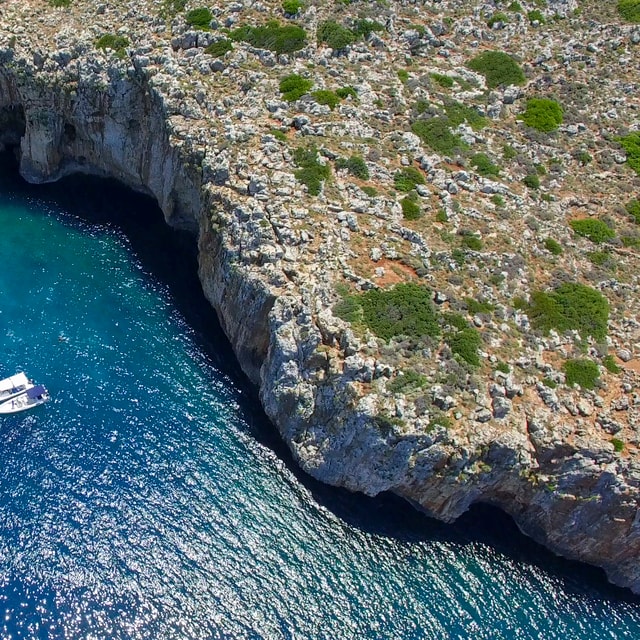
If the stop is at a lagoon like Balos, the water can be shallow for a long way out. You may need to wade through knee-deep water to get to the deeper swimming area. That is fine with water shoes, but it means you want your bag to be waterproof or at least splash-proof. A dry bag that you can carry on your shoulder is ideal.
Packing for swimming stops on a Crete cruise does not need to be complicated. The goal is to be comfortable, protected and able to enjoy each stop without fuss. Once you have the right gear, you can focus on the real reason you are there: the clear water, the quiet coves and the freedom to swim wherever the boat stops.